What We Do

Services

The full list of concrete work we quote and pour.

HomeServices

Everything we take on

Every job below is one we do ourselves across San Angelo.

Concrete Driveways

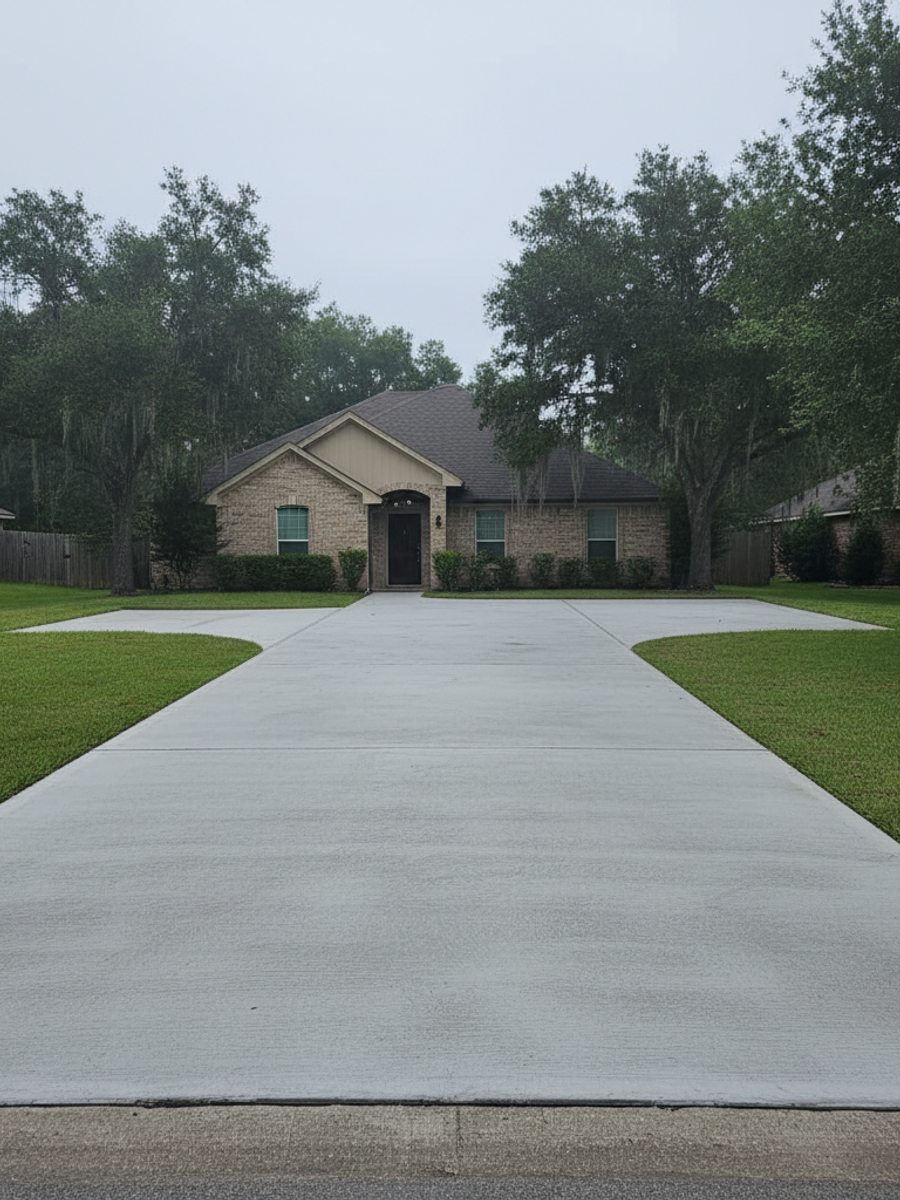
We pour driveways four to six inches thick depending on what's parked on them, with rebar or mesh set before the pour, not after. Forms get set level and joints are cut early so the driveway cracks where we tell it to instead of wherever the base shifts.

Concrete Patios

A patio slab needs to slope away from the house, usually a quarter inch per foot, or you'll be dealing with water at your back door after every storm. We broom, trowel, or stamp the finish depending on what you want it to look like.

Stamped Concrete

Stamped concrete gets you the pattern of flagstone, brick, or slate without individual pavers to relevel every few years. We color and seal it the same week it's poured so the texture and tone hold up instead of fading out in the first summer.

Concrete Repair

Cracked, spalling, or chipped concrete usually means water got underneath it or the base settled unevenly. We cut out the bad section and tie new concrete into the old with rebar or epoxy dowels instead of just skimming a patch over the top.

Concrete Slab Foundations

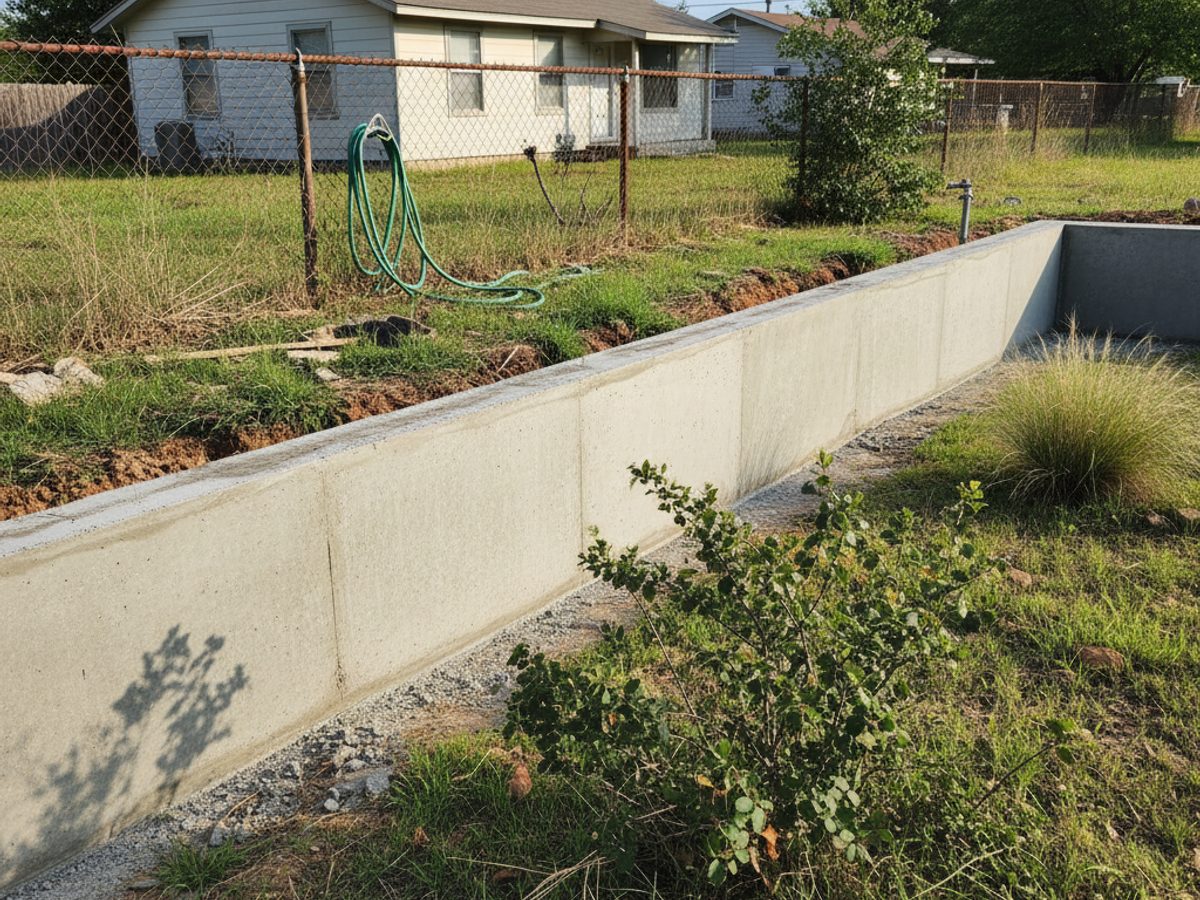
A slab foundation lives or dies on the base under it, so we grade, compact, and vapor-barrier before rebar ever goes down. Getting this step wrong is why some slabs crack straight through within the first year.

Concrete Sidewalks & Walkways

Sidewalks take a lot of foot traffic and freeze-thaw movement, even in West Texas, so we joint them every four to six feet to control cracking. We can match an existing walkway's finish or start fresh with a new one.

Concrete Steps & Porches

Steps and porch slabs get formed and poured to code rise and run, which matters more than people think until someone trips on an inch that's off. We reinforce these the same way we would a slab, since they take weight at the edges more than in the middle.

Decorative Concrete Overlays

An overlay resurfaces a worn or discolored slab without tearing it out, usually a quarter to half inch of new material bonded to the old. It's a way to get a new look on a driveway or patio that's still structurally sound underneath.

Concrete Leveling & Mudjacking

When a slab sinks on one side, we can often raise it back level by pumping a fill material underneath instead of demolishing and repouring. This works for sunken driveways, sidewalks, and porch slabs where the concrete itself is still solid.

Commercial Concrete Paving

We pour parking pads, pads for storage buildings, and small commercial lots the same way we pour residential work, with base compaction checked before concrete goes down. Thickness and reinforcement get sized to what's actually going to drive or sit on it.

How It Works

Four steps, and no surprises in any of them.

01

We come and look

You tell us what you want doing, we look at what is actually there, and we ask the awkward questions early.

02

You get a price

In writing, itemised, free. If something might add cost later we flag it now rather than at the end.

03

We do the work

Same crew throughout. We cover your floors, keep the dust down and tidy up before we leave each day.

04

We walk it with you

You point out anything you are not happy with and we fix it before the invoice, not after.

Where We Work

All of this, across San Angelo, TX

Where we pour and repair concrete around the Concho Valley.

San Angelo, TX
Ballinger, TX
Winters, TX
Eden, TX
Grape Creek, TX
Miles, TX
Mertzon, TX
Christoval, TX
Wall, TX
Veribest, TX
Water Valley, TX
Common Questions

Things worth asking

Questions that come up once a concrete job is underway.

Do I need a permit for a new driveway or patio?
Concrete driveways often need a permit if they affect drainage, tie into a city sidewalk, or change the grade near a property line, depending on local code in San Angelo. A patio poured entirely within a private backyard usually doesn't need one, but it's worth checking before the pour.
How long does a typical concrete job take?
A standard driveway or patio pour usually takes one to three days for forming, pouring, and initial finishing, plus curing time after that. Concrete needs about 24 to 48 hours before foot traffic and roughly a week before vehicles drive on it.
Can you work within a set budget?
Concrete jobs can be scoped to a budget by adjusting the finish, whether it's plain broom versus stamped or colored concrete, or by reducing the footprint. Thickness and reinforcement aren't the places to cut corners, since that affects how long the slab lasts.
Do you guarantee your concrete work?
Workmanship guarantees on concrete typically cover cracking beyond normal control-joint cracking and finish defects for a set period after the pour. Hairline cracking within control joints is expected concrete behavior, not a defect.
Who do I talk to day-to-day during the project?
On most concrete jobs, the crew lead or estimator who walked the site and wrote the quote stays the main point of contact through the pour. That keeps details about grading, joint placement, and finish consistent instead of getting lost between different people.
What materials do you use for concrete pours?
Standard concrete work uses ready-mix concrete at a strength suited to the job, rebar or wire mesh for reinforcement, and either plastic vapor barrier or compacted base rock underneath. Stamped or decorative finishes add color hardener and a release agent applied during finishing.
Can I still use my driveway or yard during the work?
A driveway or patio area is generally unusable during forming and for at least a week after the pour while the concrete cures enough for vehicle weight. Living in the house isn't affected, though equipment and material deliveries will be parked in the yard or street temporarily.
What do I need to do to get the site ready?
Clearing the area of vehicles, furniture, and landscaping near the planned slab makes site prep faster and keeps things from getting damaged during excavation. Sprinkler lines or buried utilities near the work area should be marked or pointed out before digging starts.
What if you find a problem once the old concrete is out?
Removing old concrete sometimes uncovers soft soil, tree roots, or a broken drain line that wasn't visible before the job started. When that happens, the base gets corrected before any new concrete is poured, which can add a day or two and change the cost.
How should I take care of new concrete after it's poured?
New concrete should be kept off vehicle traffic for about a week and free of de-icing salt or harsh chemicals for the first season. Sealing a driveway or patio every few years helps it resist staining and the freeze-thaw cycles that cause surface flaking.

Not sure what you need?

Describe the problem and we will tell you what it probably is. No obligation.

Call (325) 440-9214